Terms & Privacy Emails
2


We sell SaaSFrame licenses on Gumroad, a secured online selling platform for creators.
SaaSFrame gets updated all the time! Every new update and version will immediately be made available to all SaaSFrame users.
The licence key required to create your SaaSFrame account is send by Gumroad once you made your purchase. If this email is blocked by your email client, send me an email at antoine[at]unmake[dot]io so I can resend the licence key.
You can generate an invoice on Gumroad once you purchased SaaSFrame. You will find the link in the order confirmation email.
If you're not satisfied, you can ask for a refund within 7 days. Just send me an email at antoine[at]unmake[dot]io
A SaaS terms or privacy update email informs recipients that maintained policy material has changed. Its design should identify the affected documents, relevant timing, notable changes, and a route for questions without disguising the notice as a promotional campaign.
This guide concerns communication structure. The historical screenshots do not establish current legal terms or provide legal advice.
A terms update, privacy-policy update, and subprocessor notice concern different material. Identify what changed rather than using a broad policy-update heading alone.
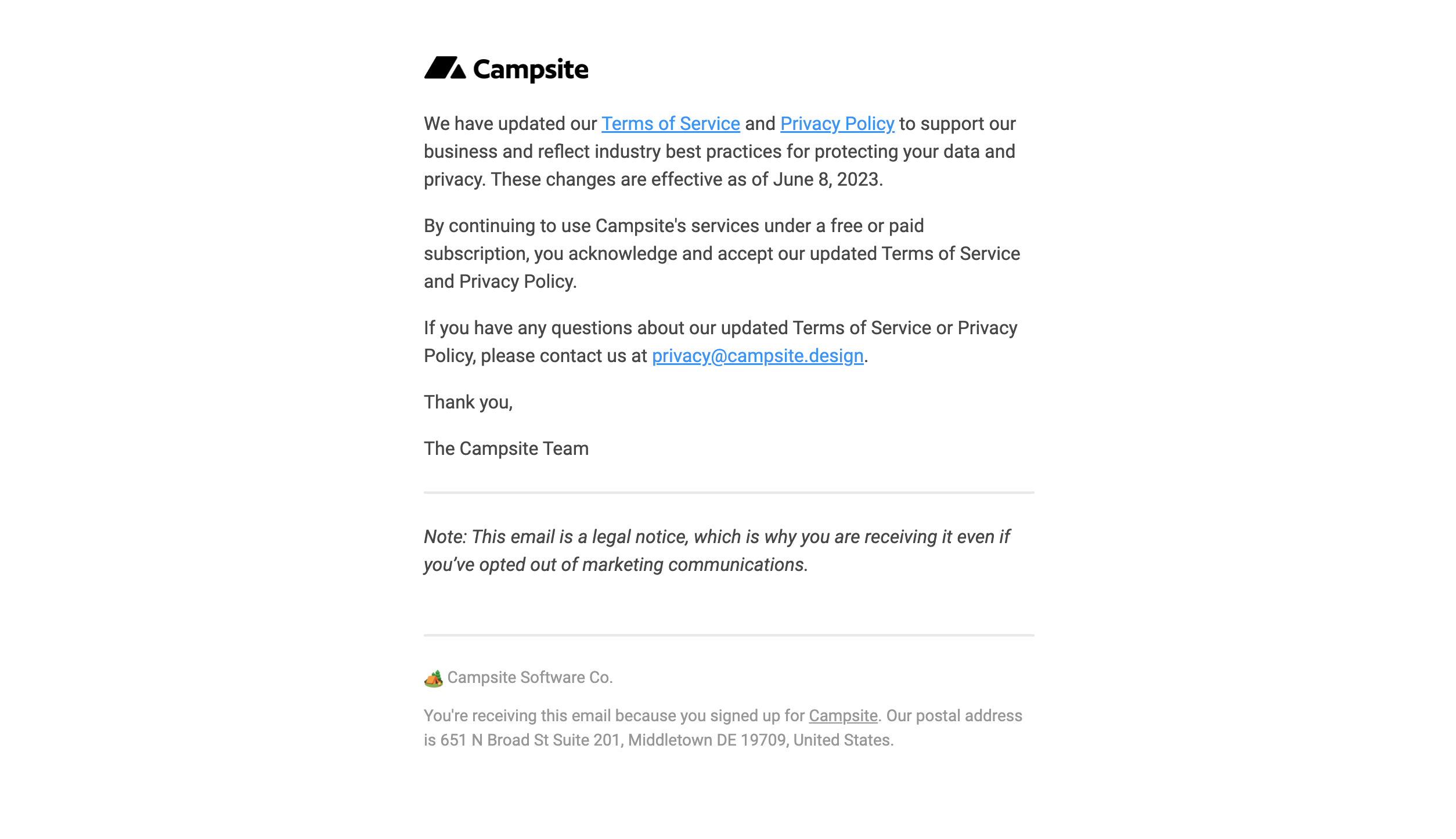
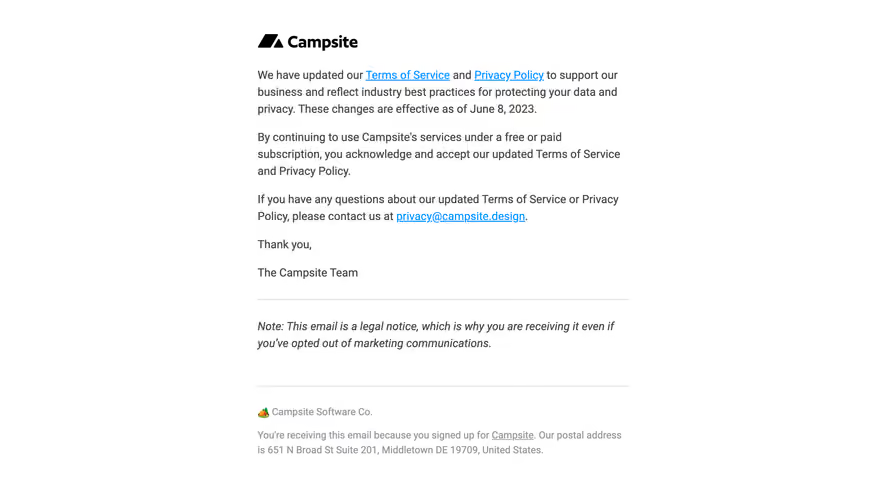
The Campsite reference names updated terms and privacy material, provides links, states an effective date, and includes a contact route. A separate note explains the message's notice context.
This compact format makes the document route central. Exact legal wording and timing must come from the responsible owners of the actual policy, not from another product's example.
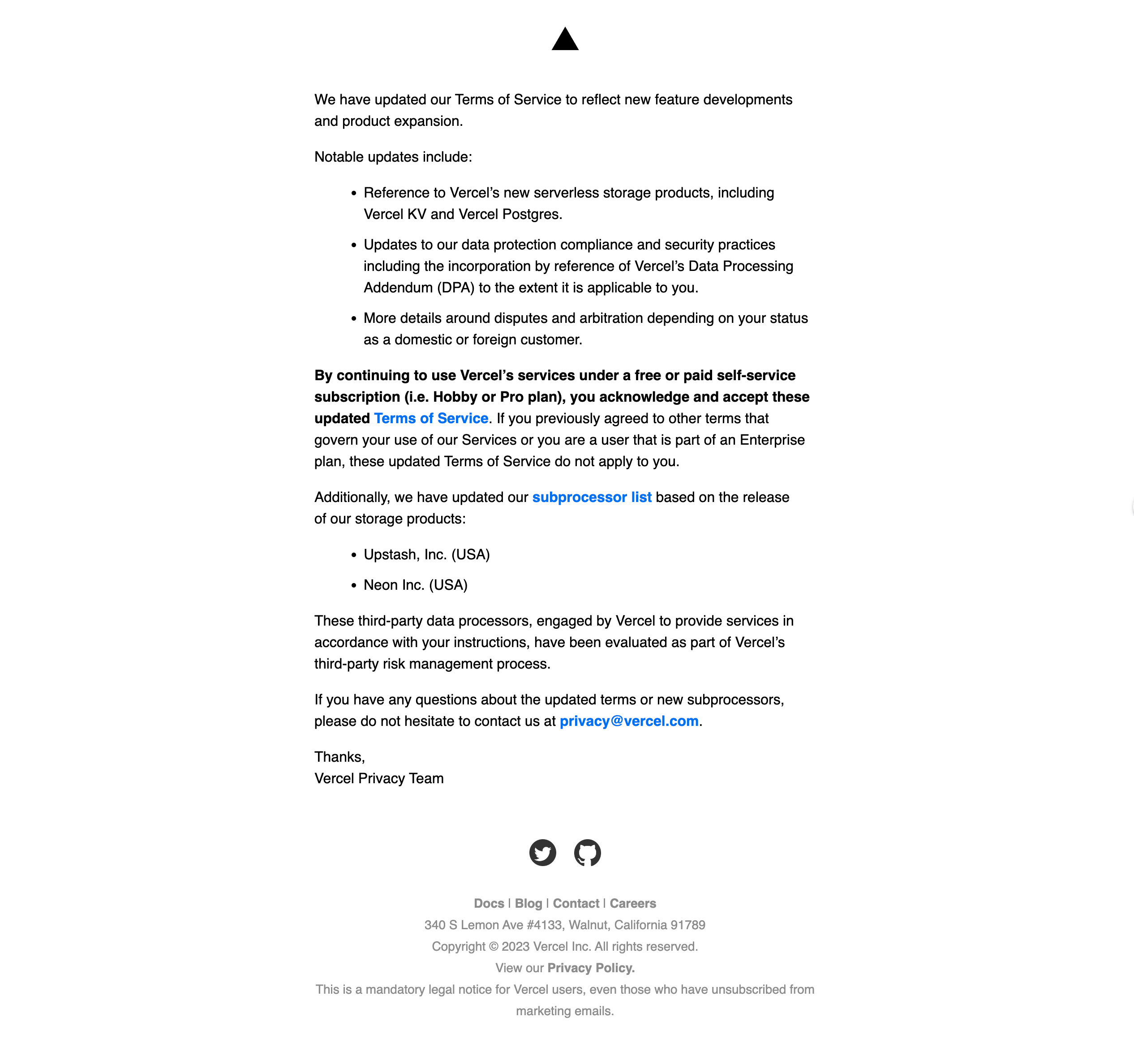
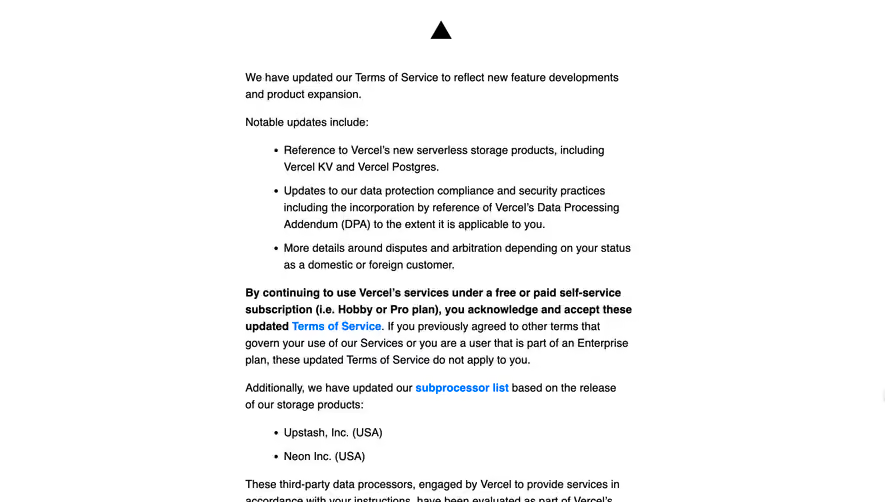
The Vercel reference uses a longer message with a notable-updates list, document links, subprocessor information, and a privacy contact.
A summary can help readers orient themselves before opening the full material. Keep it faithful to the actual change and do not omit a consequential condition merely to shorten the email.
The linked document remains the appropriate source for complete wording. A design summary should not invent a legal interpretation.
Some notices inform recipients; others may require a specific step under the product's process. State the actual requirement and its timing accurately.
Do not use a generic accept button if the destination simply opens a document. Reading, acknowledgement, and consent are different actions.
If the message discusses continued use, preserve approved wording and relevant scope rather than casually paraphrasing a legal consequence.
A recipient with a policy question should know which contact or process is relevant. Keep it distinguishable from sales and ordinary product feedback.
Document links should identify the material and lead to the maintained version or relevant update context. Avoid an unexplained homepage destination.
If archived versions are available, make their status clear so a reader does not confuse old and current wording.
Use plain headings, short paragraphs, and descriptive links. Essential information should remain available when images are blocked.
Branding can establish identity, but the notice does not need a large campaign hero before its subject. Keep timing and document access easy to find on mobile.
Do not mix unrelated offers into the main notice. The reason for receiving it should remain explicit.
Check document names, timing, links, recipient scope, and contact routes with responsible owners. Verify that email and destination versions agree.
Use SaaSFrame's terms-and-privacy email references to compare concise notices and change summaries. Borrow the hierarchy while maintaining the product's own approved content.
Usually a faithful summary and clear document route are more usable, with complete maintained material available at the destination.
No. Label the actual action and use approved wording for any required acknowledgement or consent process.
The responsible policy owners should check wording, scope, timing, and document destinations before publication.