 SaaSFrame
👌 Customer Stories
Convert prospects with social proof through impactful SaaS case study and customer story designs. Discover layouts that highlight measurable results, video testimonials, and industry-specific use cases to build authority and demonstrate real-world ROI.




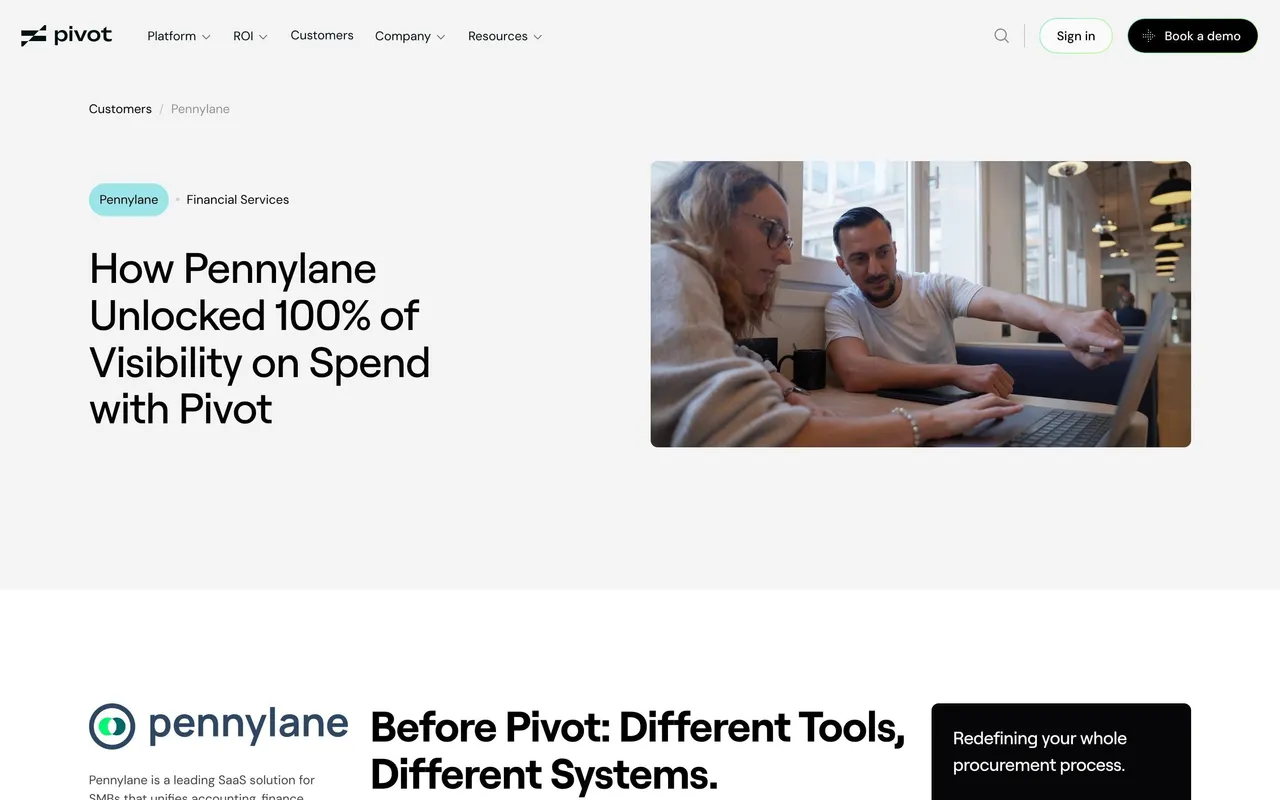


Index of all 76 Customer Stories examples
- NewsCatcher Customer Stories
- Lightdash Customer Stories
- Profound Customer Stories
- Dust Customer Stories
- Searchable Customer Stories
- Span Customer Stories
- Hyperline Customer Stories
- Solidroad Customer Stories
- Prelude Customer Stories
- Paddle Customer Stories
- Speakeasy Customer Stories
- Payhawk Customer Stories
- Tailscale Customer Stories
- Anchor Customer Stories
- OpenAI Customer Stories
- Mintlify Customer Stories
- Linear Customer Stories
- Threads Customer Stories
- Alloy Customer Stories
- Greenly Customer Stories
- Supabase Customer Stories
- Stripe Customer Stories
- Blobr Customer Stories
- Popwork Customer Stories
- Brevo Customer Stories
- Acquire Customer Stories
- WorkOS Customer Stories
- Surfe Customer Stories
- Twingate Customer Stories
- Evervault Customer Stories
- Lattice Customer Stories
- Blobr Customer Stories
- Arcade Customer Stories
- June Customer Stories
- Libeo Customer Stories
- Attio Customer Stories
- Reveal Customer Stories
- Vercel Customer Stories
- Officevibe Customer Stories
- Raycast Customer Stories
- Mapbox Customer Stories
- June Customer Stories
- PlanetScale Customer Stories
- GitHub Customer Stories
- Placid Customer Stories
- Upflow Customer Stories
- Shogun Customer Stories
- Contractbook Customer Stories
- Notion Customers Stories
- Intercom Customer Stories
- Airtable Customers Stories
- Zendesk Customer Stories
- Webflow Customers Stories
- GraphCMS Customer Stories
- Workable Customer Stories
- PandaDoc Customer Stories
- Figma Customer Stories
- Mixpanel Customer Story
- Weglot Customer Story
- ProductBoard roductboard Customer Story
- Miro Customer Story
- Guru Customer Story
- Clearbit Customer Story
- Close Customer Story
- Segment Customer Story
- Proof Customer Stories
- Spendesk Customer Stories
- Payfit Customer Stories
- Livestorm Customer Stories
- Aircall Customer Stories
- Slite Customer Stories
- Slack ow Toptal and GitLab build community and work-life balance in
- Front Customer Stories
👌 Customer Stories: design guide
Short answer
A SaaS customer story explains one customer's problem, how they adopted the product and what changed. Start with the customer and their task, describe the situation before the result, give numbers enough context to be credible, explain the implementation and link to related evaluation material.
In the libraryas of November 2026
- Screens
- 76
- SaaS products
- 74
- Last added
- Nov 2026
Common patternsTestimonial 1
Recently addedRespanVoiceflowPivotNewsCatcherLightdash
A SaaS customer story explains a specific customer's problem, implementation, and observed result. Its design should help readers assess relevance and evidence rather than presenting a large number without the context needed to interpret it.
The SaaSFrame captures are historical case-study layouts. Their results belong to the displayed stories and are not independently verified or presented as typical outcomes here.
Who is the customer and what were they trying to do?
Identify the organization and the problem being addressed. A headline can mention a result when the story provides the supporting context.
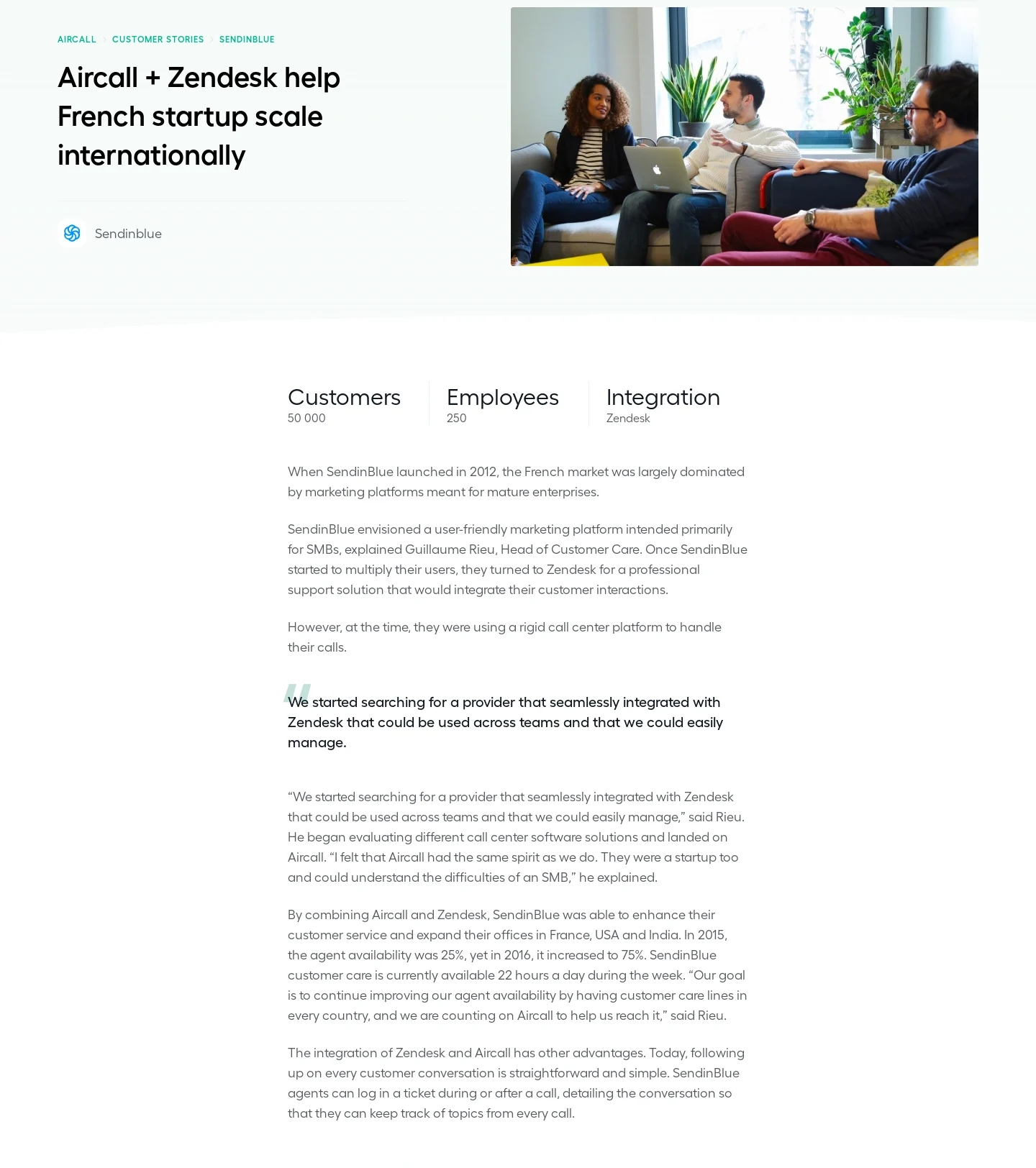
The Aircall reference introduces a customer story involving Aircall and Zendesk, then presents company context, an implementation narrative, attributed quotations, images, and related stories.
This helps readers understand the role of an integration within a larger workflow. Keep the contribution of each tool clear instead of attributing every change to one product by default.
Explain the situation before reporting improvement
A result needs a baseline, relevant period, and scope where those factors matter. Explain what the customer was doing and what changed in the process.
Avoid turning a narrative into a sequence of unsupported success claims. Concrete implementation detail gives the reader a way to judge similarity to their own situation.
Distinguish the customer's attributed account from a separately measured value. Both can be useful when labeled appropriately.
Give results enough context to be assessed
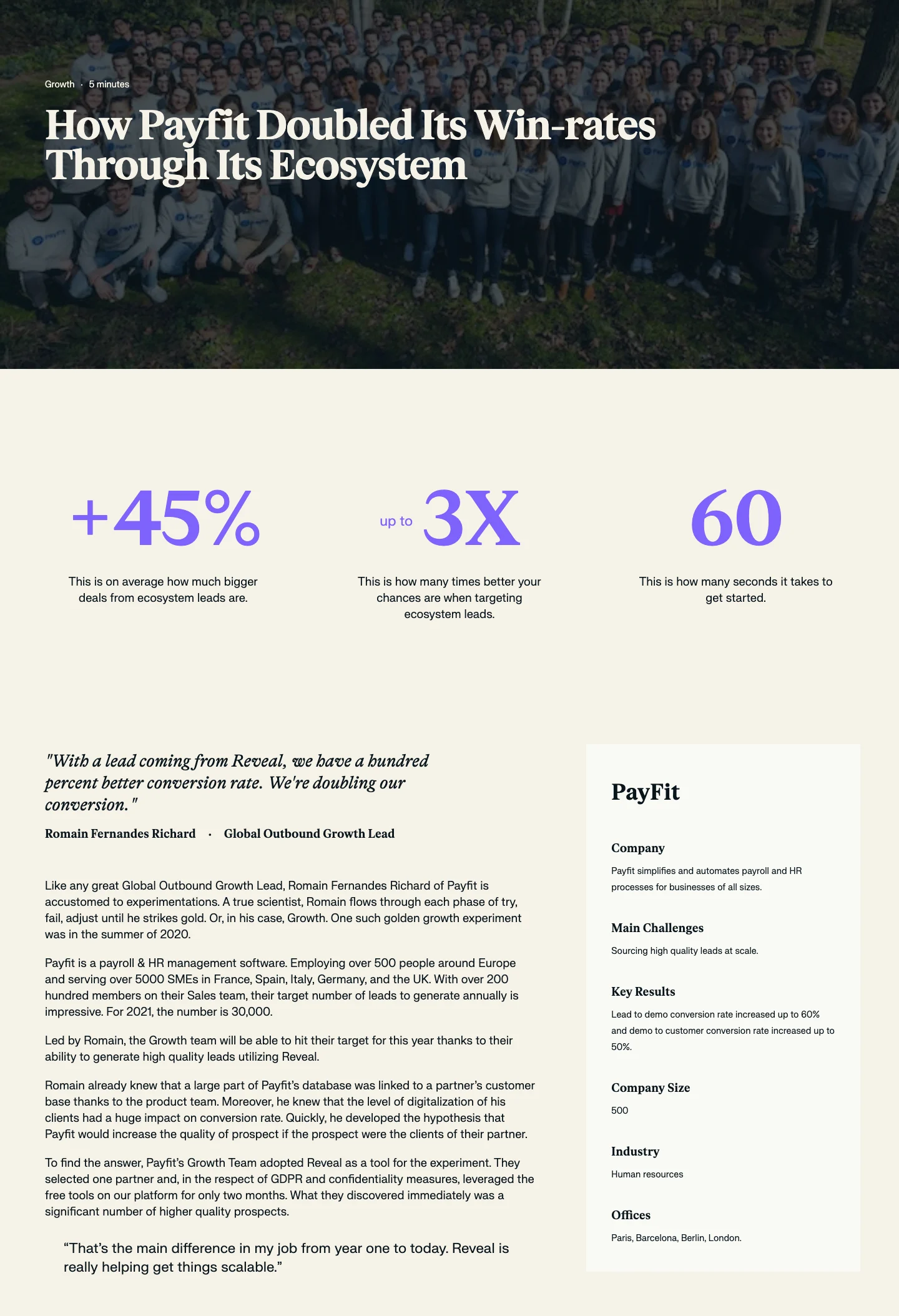
The Reveal reference leads with a customer-specific outcome and prominent figures, followed by an attributed quotation, narrative sections, and a company-context sidebar.
The sidebar helps readers identify the organization and its circumstances while reading. Prominent figures should remain connected to their definitions and supporting explanation.
Do not let visual emphasis make a limited observation appear universal. Another customer's reported result is not a guarantee for the visitor.
Describe the implementation path
Explain the relevant setup, workflow, participants, and adoption choices. A reader should be able to identify what the customer actually changed.
Keep technical depth proportionate to the story. Link to feature or integration detail when the case raises an implementation question that needs a fuller answer.
Do not invent missing steps because the story would read more smoothly. A honest limit is preferable to an unsupported narrative.
Use quotations for perspective
A quotation can explain a decision, concern, or experience in the customer's voice. Preserve attribution and approved wording.
Avoid using a short testimonial as proof of every headline metric. The relationship between a statement and a result should remain explicit.
Photography and logos can establish identity, but they should not replace the problem-and-change explanation.
Connect the story to relevant evaluation
Offer related cases that share a task or situation, then provide an appropriate product route. The next action should follow what the reader learned.
A case-study page should remain useful even if the visitor is not ready for a sales conversation. Feature detail and documentation can support further assessment.
Review company context, claims, dates, and destinations with responsible owners as the story is maintained.
Study proof and narrative together
Explore SaaSFrame's customer-story references to compare narrative layouts and result summaries. Build a story that makes a particular outcome understandable and its relevance assessable.
Customer story questions
Should every headline include a metric?
No. Use a metric only when its definition and supporting context can be established. A concrete workflow story can be valuable without one.
What makes a result meaningful?
Explain the relevant baseline, period, population, and implementation context where needed.
Does one customer's result predict another's?
No. Present it as a specific case and help visitors judge similarity rather than promising an identical outcome.