⏳ Free Trial Email
Convert trialists into paying customers with strategic SaaS Free Trial email sequences. This collection showcases 'Trial Ending' reminders, feature spotlights, and value-based selling techniques designed to maximize your trial-to-paid conversion rate.
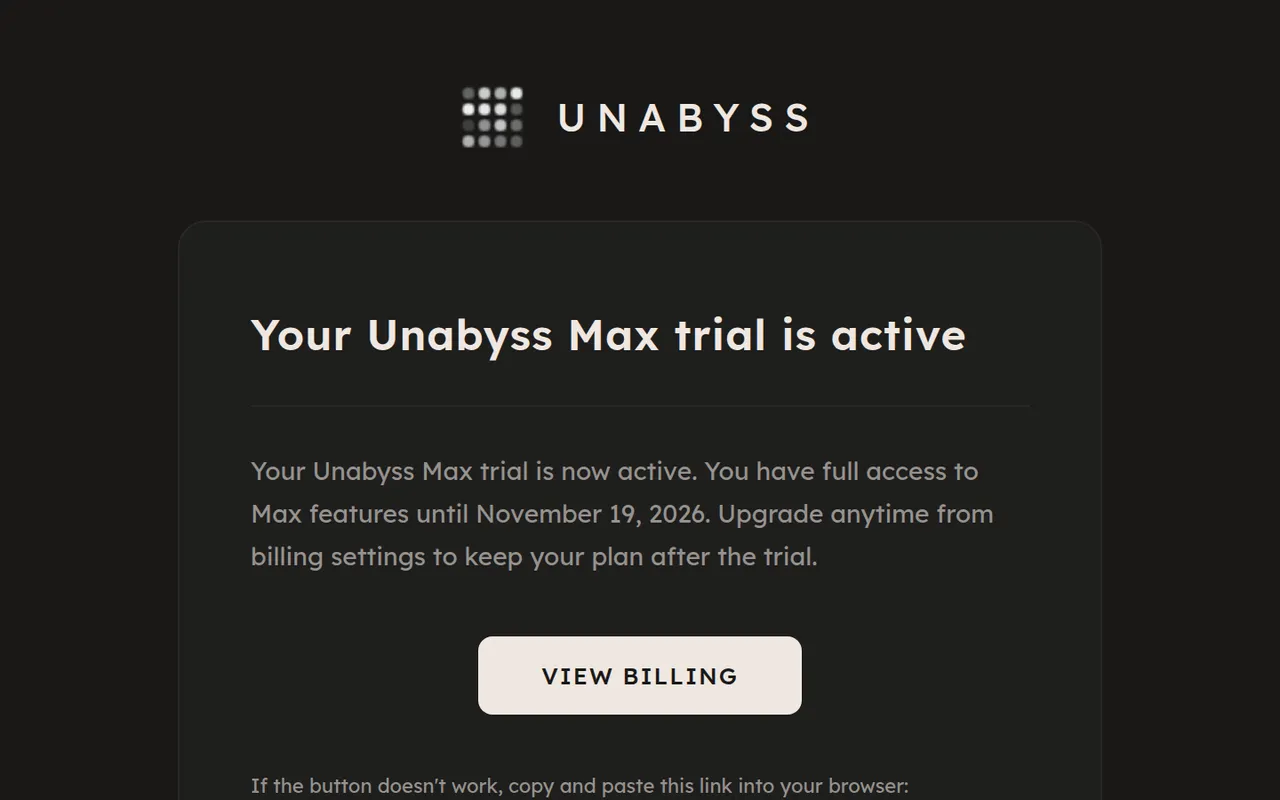

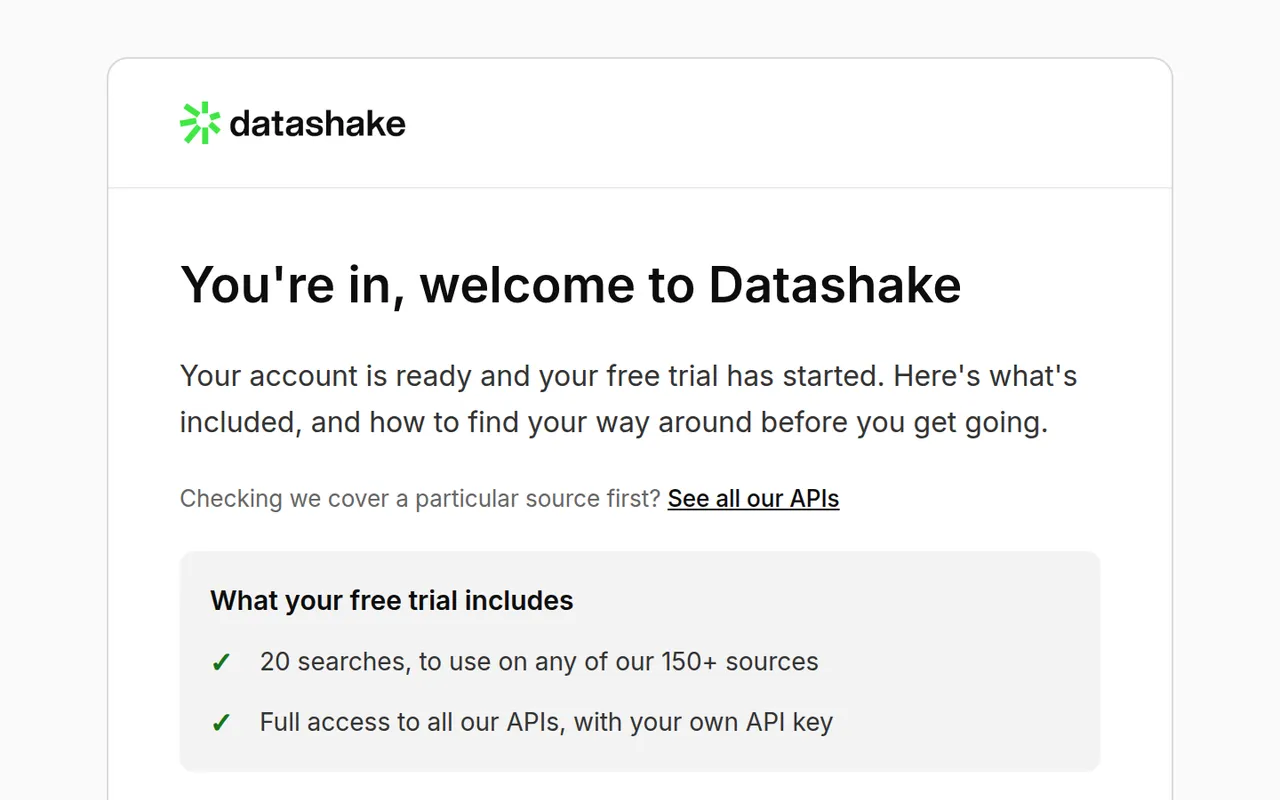

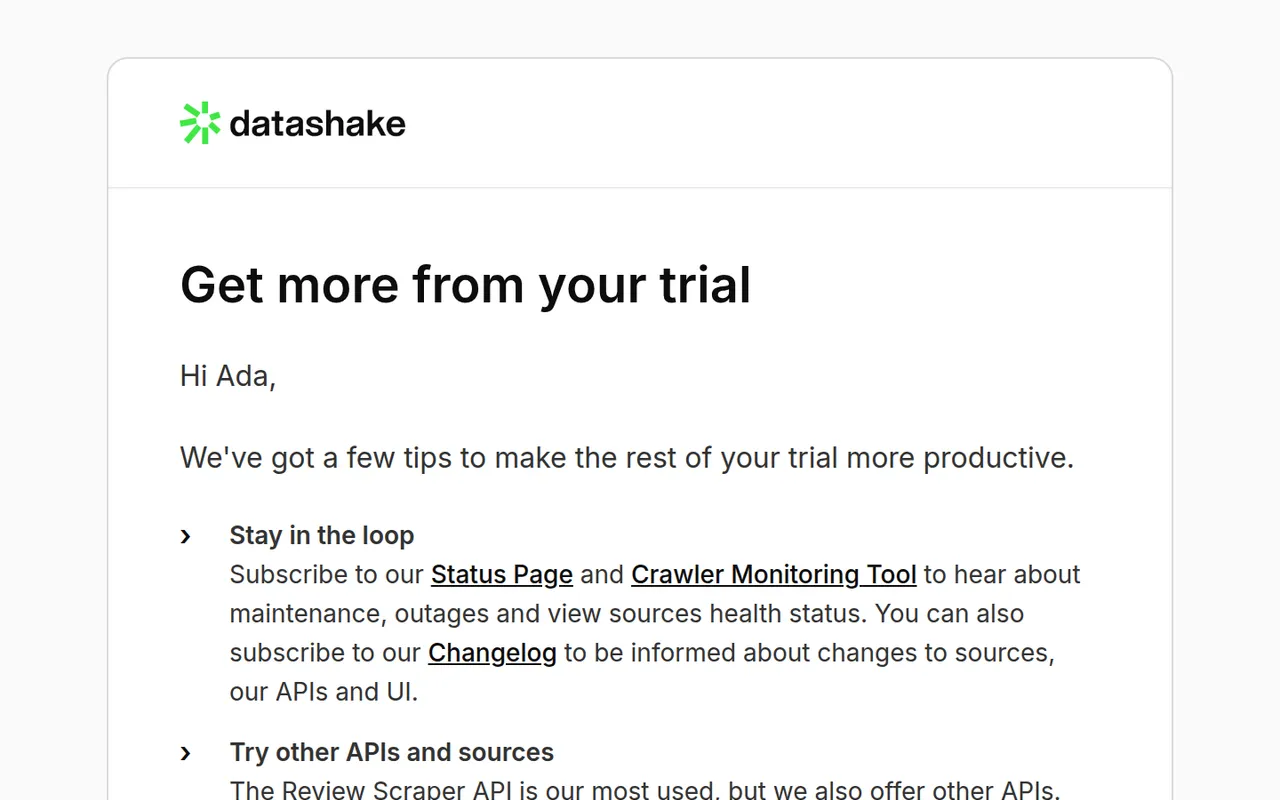
Index of all 27 Free Trial Email examples
- AskAiRank Free Trial Email
- AskAiRank Free Trial Email 2
- Unabyss Free Trial Email 2
- Datashake Free Trial Email 3
- Humblytics Free Trial Email
- Humblytics Free Trial Email 2
- GitBook Free Trial Email 2
- Datashake Free Trial Email 4
- Customer.io Free Trial Email 2
- Customer.io Free Trial Emails
- Dock Free Trial Emails
- Dock Free Trial Emails
- Dock Free Trial Emails
- Popwork Free Trial Emails
- Popwork Free Trial Emails
- Albato Free Trial Emails
- Albato Free Trial Emails
- Meiro Free Trial Email
- ChartMogul Free Trial Emails
- Conduktor Free Trial Emails
- Conduktor Free Trial Emails
- Conduktor Free Trial Emails
- Zencal Free Trial Emails
- Zencal Free Trial Emails
⏳ Free Trial Email: design guide
In the libraryas of November 2026
- Screens
- 27
- SaaS products
- 13
- Last added
- Nov 2026
Recently addedDatashakeGitBookHumblyticsUnabyssAskAiRank
A SaaS free-trial email helps a user understand their trial state and make an informed decision about continuing. Its design should connect time remaining, available actions, and the actual consequence of expiry.
State the trial's current status
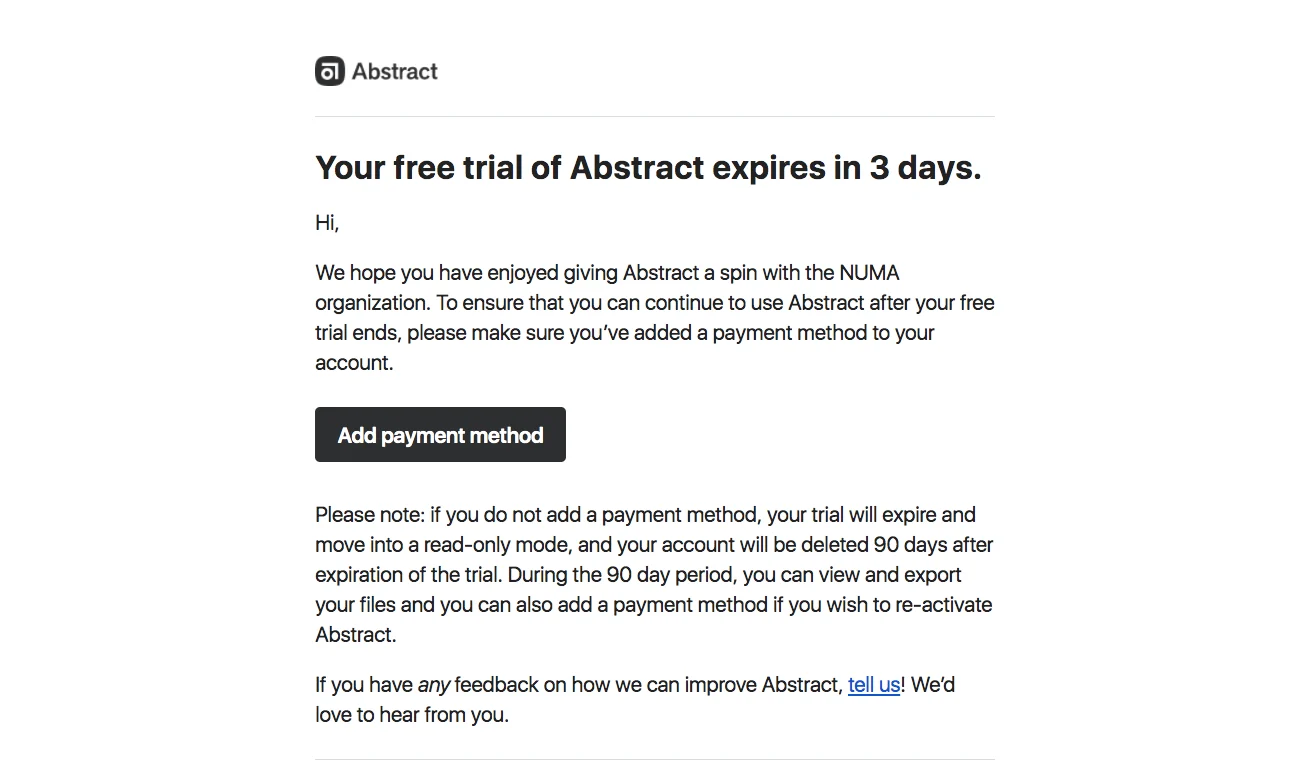
The Abstract reference gives an expiry reminder, a payment-method action, and an explanation of what happens if the user does not continue. It also offers a feedback route.
This puts the consequence beside the action. The captured timing and account rules are historical product details, not universal trial behavior.
Use the user's actual trial state rather than a generic countdown disconnected from the account.
Explain financial and access outcomes separately
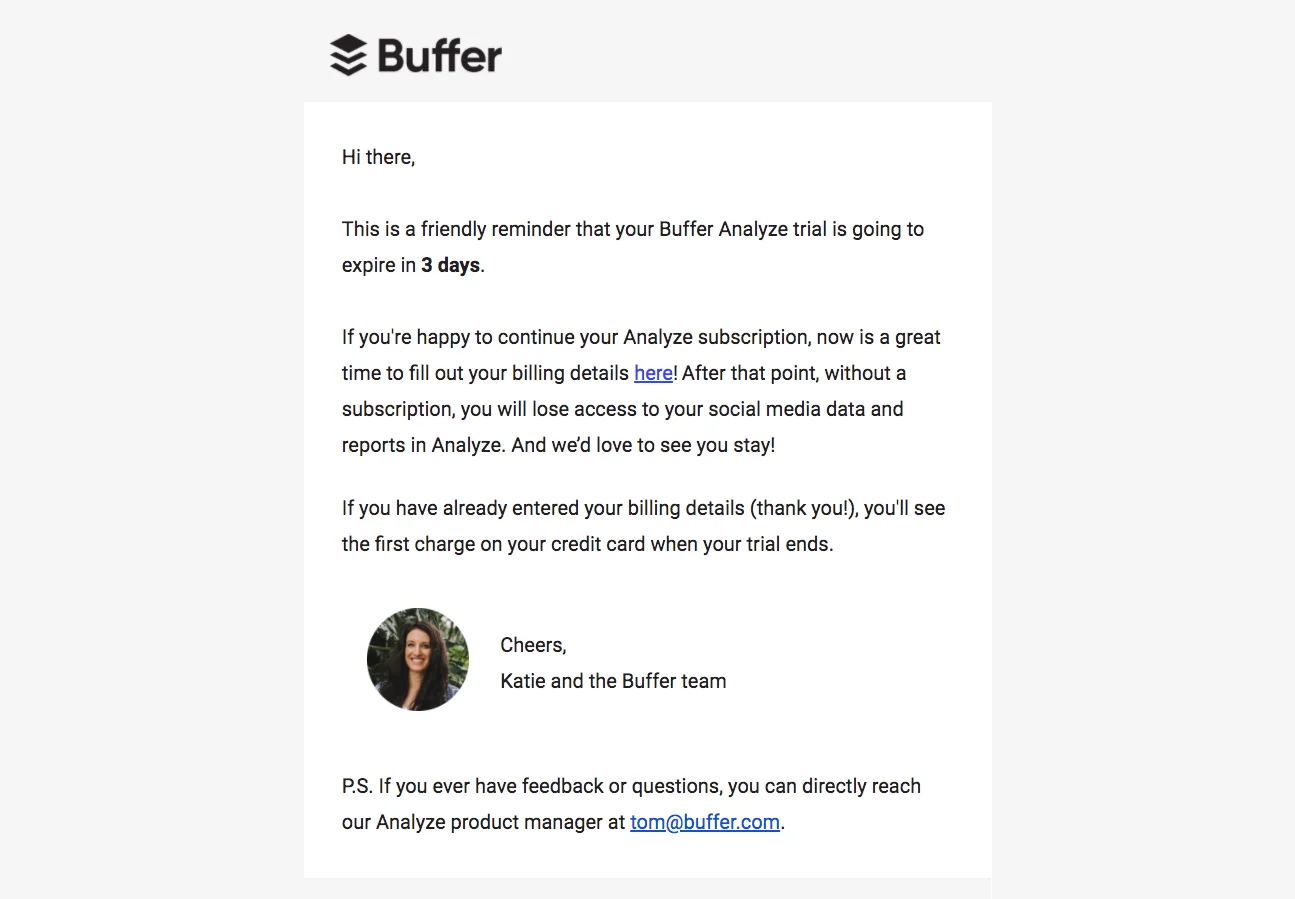
The Buffer reference explains trial expiry, loss of access without a subscription, and the charging context for users who already entered billing information.
Different account states can require different messages. A user with no payment method and one whose trial automatically converts should not receive an ambiguous identical reminder.
Exact billing consequences must match the product's maintained rules. A design reference cannot establish current payment or cancellation conditions.
Connect the decision to useful product activity
A trial message can offer setup help, relevant examples, or a route to inspect work completed. Keep those actions focused on the user's evaluation.
Avoid pretending that urgency alone makes the product suitable. Explain the next decision and provide information that supports it.
If the user is blocked, an assistance route may be more useful than another upgrade prompt.
Match the CTA to the required step
Add payment method, select a plan, subscribe, and contact support are distinct actions. Label the actual destination.
Submitting payment information is not always the same as starting a subscription. Confirmation should reflect the established transaction state.
Preserve relevant plan and workspace context through the handoff where supported.
Keep expiry accurate and recoverable
State the real date or remaining period using the account's actual timing. Explain any available continuation or recovery route without inventing an extension promise.
Do not send an expiry warning after conversion or cancellation has changed the state. Targeting and sequence updates are part of the design's honesty.
Essential consequences should remain readable as text rather than living only in a banner.
Review each trial lifecycle state
Test trial start, incomplete setup, approaching expiry, converted accounts, and expired access. Check email, billing page, and confirmation consistency.
Use SaaSFrame's free-trial email references to compare expiry and financial explanations. Design around a clear continuation decision.
Trial email questions
Do all trials have the same expiry consequence?
No. Explain the actual access and billing model for the recipient's account.
Is adding a card the same as subscribing?
Not necessarily. Label and confirm the specific action the system performs.
What should stop the reminder sequence?
Update it when conversion, cancellation, expiry, or another established state makes the original message inaccurate.