✉️ Invitation Email
SaaS invitation emails: the invite a teammate receives to join a workspace, and the nudges that encourage users to bring their team. How products show who invited you, to what, and make joining a single step.


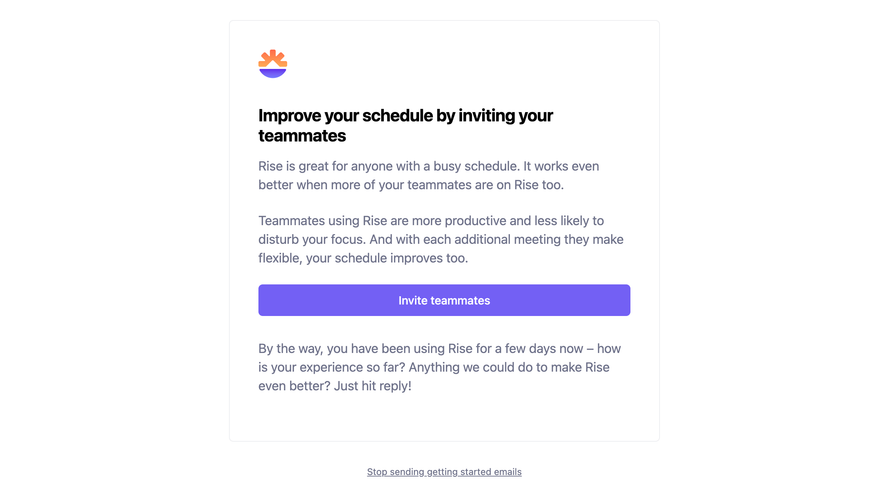

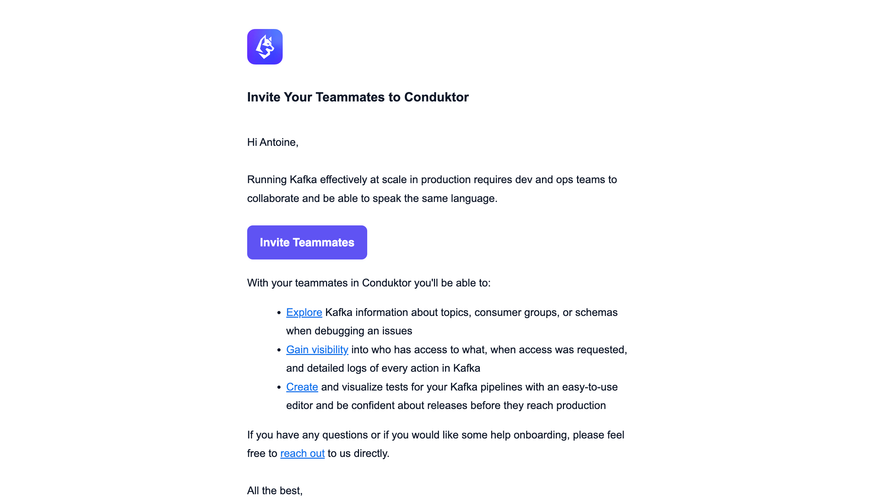

✉️ Invitation Email: design guide
A SaaS invitation email tells a recipient who invited them, what they are being invited to join, and how to accept. Its design should explain the relationship before introducing broad product benefits.
Establish the inviter and destination
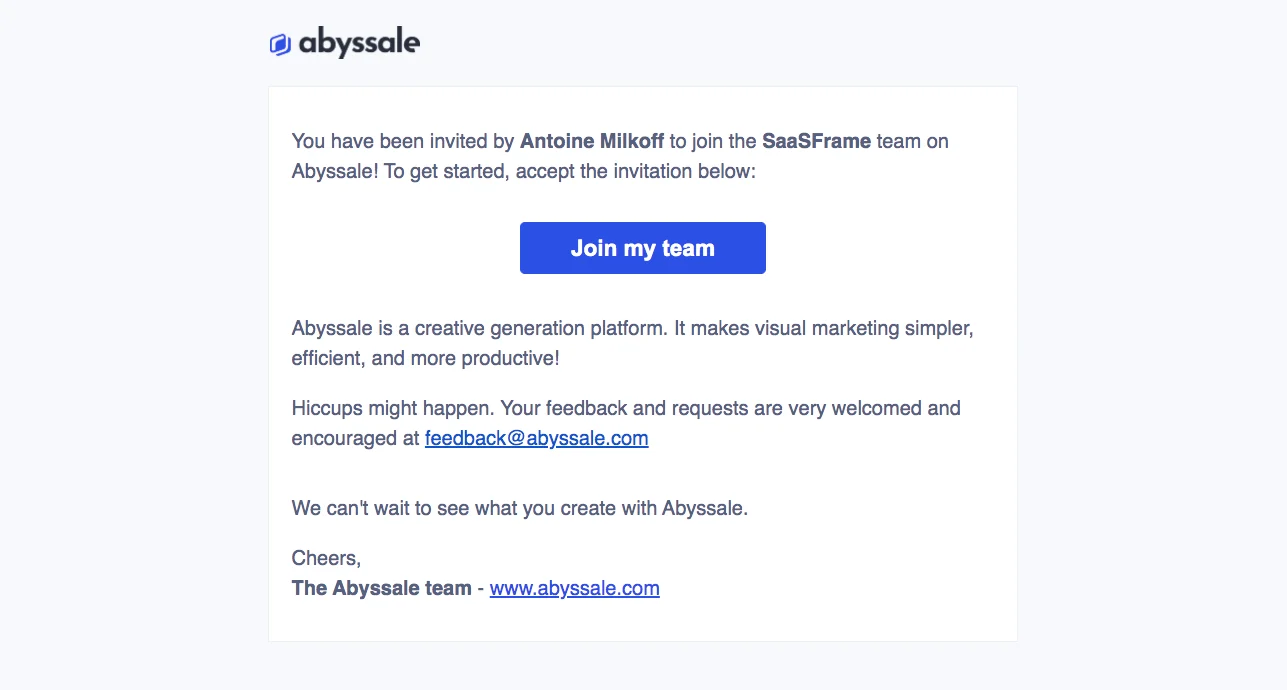
The Abyssale reference names an inviter and a team, then presents a join-team action. A short product explanation and support context follow.
That order gives the recipient a reason for the message and an identifiable destination. A general welcome headline is less useful if the reader cannot tell which organization is involved.
Do not imply active membership before acceptance. An invitation creates a pending relationship, not necessarily completed access.
Explain the access being offered
A workspace invitation, shared-document invitation, and product referral have different scopes. Use language that identifies the actual relationship.
When a role or permission level matters, make it reachable before the recipient accepts. Avoid suggesting unrestricted access when the invitation is narrower.
If the user needs an existing or new account, explain the relevant route and preserve the invitation context through authentication.
Distinguish acceptance from installation
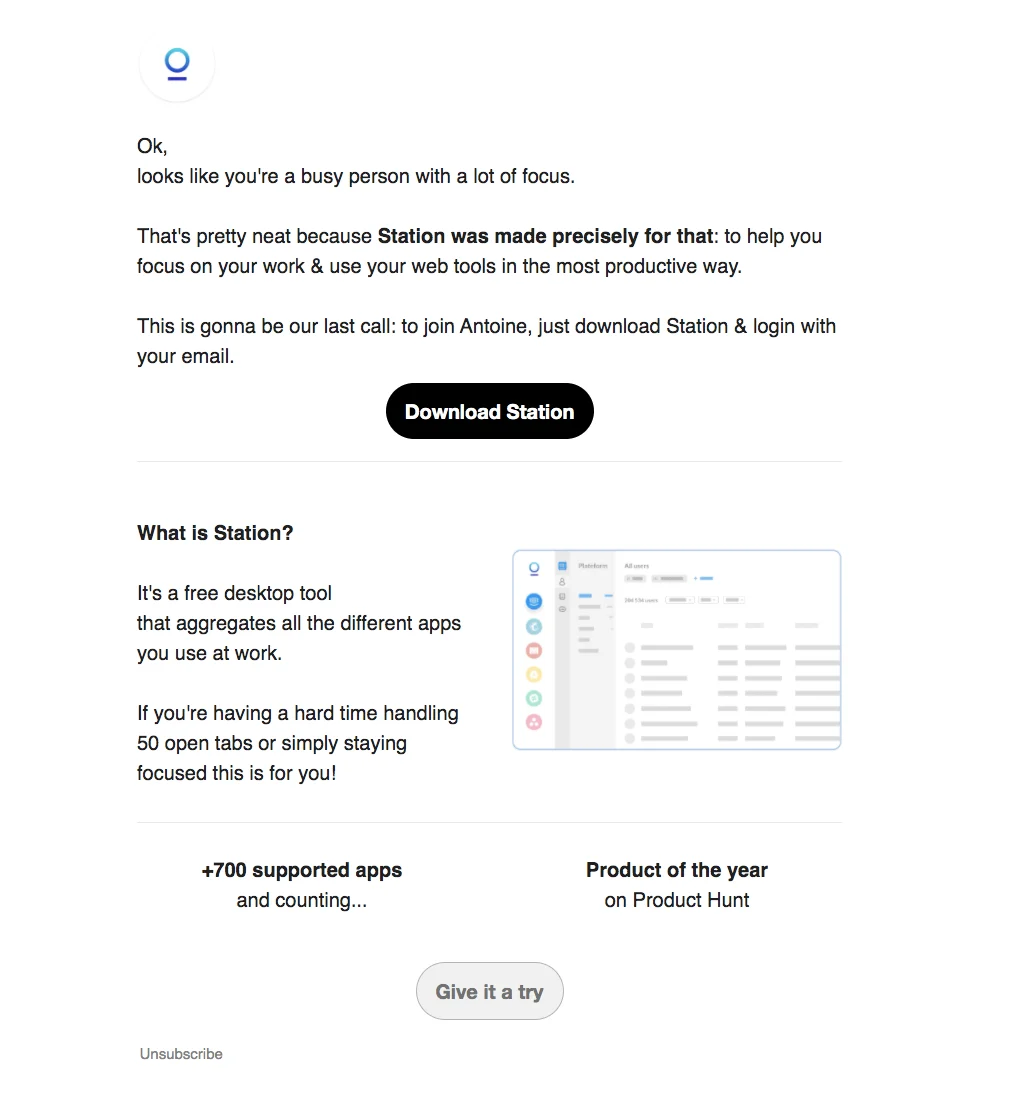
The Station reference invites the recipient to join another person but makes downloading the application a prominent step, followed by product context.
This shows that participation can involve a prerequisite. Downloading an app and accepting membership are separate outcomes and should be described accordingly.
If several steps are required, keep the sequence short and explicit. The recipient should understand why the first action does not immediately complete the invitation.
Keep the CTA aligned with the destination
Accept invitation, join team, open a document, and download an app should lead to the corresponding experience. Avoid a generic homepage handoff.
If an invitation has expired or been revoked, show the actual state and a useful replacement-request route. Do not imply access was granted.
Already-member and wrong-account states need coherent guidance. A recipient may open the message while signed into another identity.
Keep product context secondary
A brief explanation can help someone unfamiliar with the product. It should not push the inviter and destination far below promotional material.
Use essential information as text so the invitation remains useful when images are blocked. A brand mark alone does not explain the relationship.
Avoid describing historical plan or access conditions as current rules. The implementation must determine the invitation's actual scope.
Review both sender and recipient journeys
Check that the sender's invitation dialog and the email describe the same team, role, and state. Test acceptance, expiry, repeat use, and authentication handoffs.
Explore SaaSFrame's invitation-email references to compare direct joining and prerequisite steps. Design around a recipient understanding and completing the offered relationship.
Invitation email questions
Does receiving the email mean membership is active?
Not necessarily. Confirm membership only after the actual acceptance process establishes it.
What belongs before the CTA?
Identify the inviter, destination, and consequential access scope.
Should installation count as acceptance?
Only if that is the real process. Otherwise, distinguish the prerequisite from joining the workspace.