1. Header: At the top of the page, there is a minimalistic header that includes the Ludus logo and a hamburger menu icon that opens up the navigation menu. 2. Hero Section: The main section of the page features a large full-screen visual centered on the screen. There is a bold headline that reads "Ludus empowers creators" and a subheading that describes what the platform does. 3. Navigation menu: Clicking on the hamburger icon in the top left corner opens up the navigation menu, which consists of four items: Features, Templates, Pricing, and Sign In. 4. Features Section: This section of the page goes into detail about what the Ludus platform offers its users. Each feature has an icon and a title, along with a short description. 5. Templates Section: Here, users can browse the various templates that Ludus provides. Clicking on a template takes the user to a page where they can preview the template and make changes. 6. Pricing Section: The pricing section is split into two parts. The first part highlights the benefits of subscribing to Ludus, while the second part compares the various pricing plans that Ludus offers. 7. Sign up: At the end of the page, there is a sign-up form for users who are interested in subscribing to Ludus. 8. Footer: The footer includes links to various pages on the Ludus website, such as the company blog, help center, and terms of service. It also includes social media links and a copyright notice. Overall, the Ludus website has a clean and modern design, with a focus on highlighting the platform's features and benefits. The navigation is intuitive, and the page is easy to navigate.

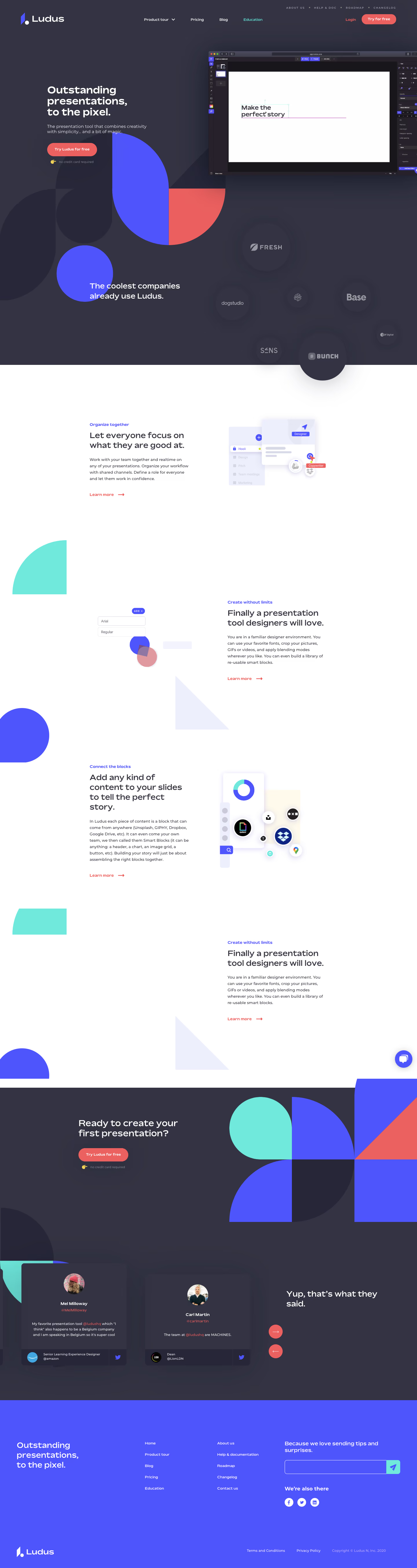

Ludus Landing Page

Ludus
Limitless creativity for your slides
Designed by
No items found.
Category
Patterns
No items found.
Tech Stack
Added on
October 20, 2020