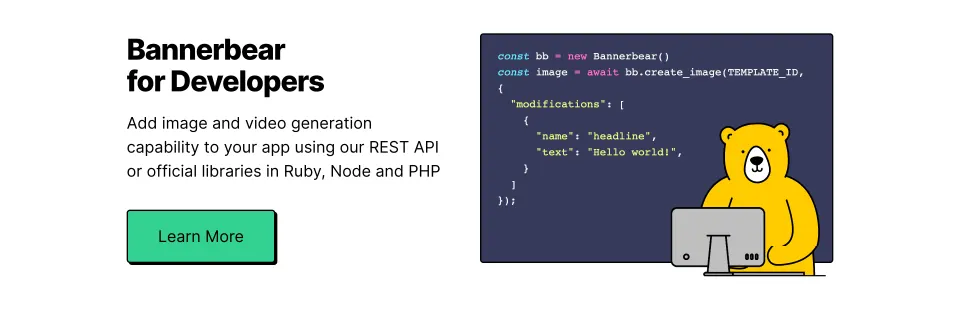
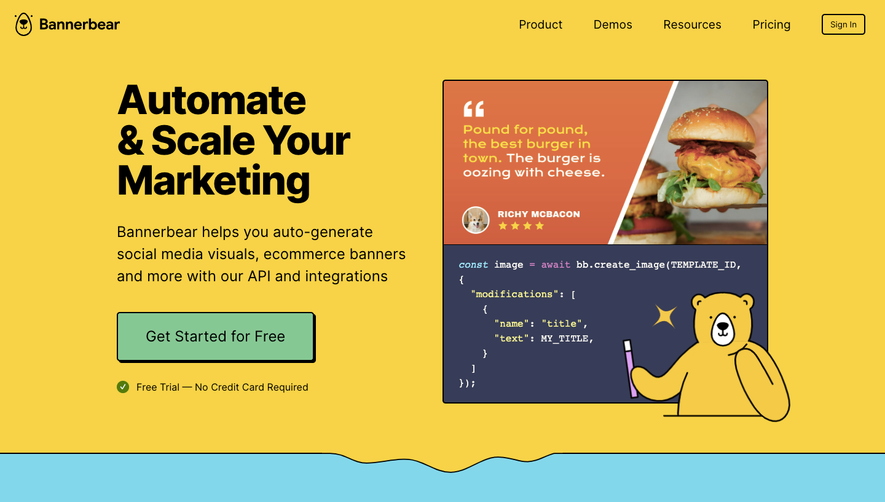
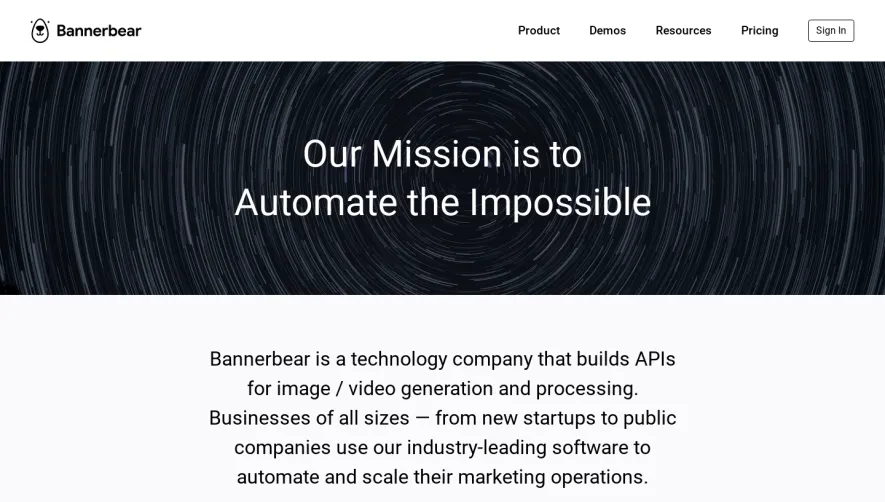
1. Header - The page opens with a header section that contains the company's logo on the left, a hamburger menu icon, and a Call to Action (CTA) button on the far right, prompting users to "Start your free trial". 2. Hero section - It features a brief statement about the company, "Dynamic imagery at scale," followed by an eye-catching and well-designed hero graphic that showcases the company's product. 3. Features section - This section highlights the key features of Bannerbear, including "Templates," "API," "Integration" and "Dynamic Image Generation." Each of these features is presented with different illustration to make it easy for visitors to understand what the service entails. 4. How it works section - This section explains how Bannerbear works using visual graphics and concise text. The section highlights the process of generating dynamic images, from template selection to content customization. 5. Use Cases section - Here, Bannerbear shares different use cases for their service, from creating social media visuals to modernizing e-commerce sites with dynamic imagery. 6. Pricing section - This section presents the pricing plans available for Bannerbear services. It features three different options, a "Free" plan limited to 50 image transformations per month, a "Starter" plan, and a "Scale" plan with custom pricing for high-volume users. 7. Testimonials section - The page features a section with customer testimonials, including logos of companies such as Monday.com and Gumroad, further establishing the company's credibility. 8. Sign up section - The page concludes with a sign-up section that is visible at all times, which enables users to sign up for a free trial easily. The page has a minimalist design with a seamless navigation menu that makes it easy for visitors to quickly understand the company's offering and take action in signing up for their service.
 SaaSFrame